Folic Acid is a familiar name on nutrition labels, yet choosing a reliable manufacturer requires more than comparing prices. The market includes producers serving food, supplement, and pharmaceutical supply chains. Their products may look similar on paper. Manufacturing controls, batch records, testing methods, and clear specifications help distinguish one supplier from another. Small details matter.
Dr. José F. Cordero, a physician and birth-defects researcher, has helped advance public understanding of folic acid and birth-defect prevention. The U.S. Centers for Disease Control and Prevention states, “Folic acid is a B vitamin that every cell in your body needs for healthy growth and development.” That public-health context is important, but this supplier overview is not medical advice. It focuses on manufacturers and the evidence buyers can review.
The “Top 10 Folic Acid Manufacturers in China” outline should consider production capability, quality documentation, product consistency, export experience, and communication. A polished website is not proof of a strong quality system. Ask for current certificates, product specifications, and recent test reports, then check that the documents match the product being offered. Not every detail is easy to verify. That deserves a second look. The aim is a practical shortlist, not an unqualified endorsement of any company.
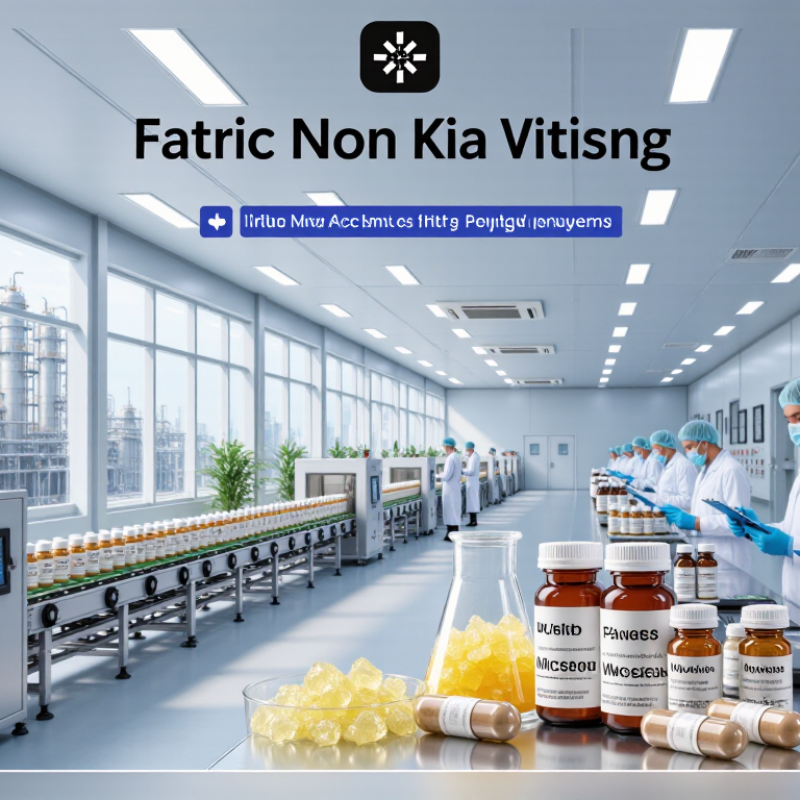
China’s folic acid production supports supplement makers, food fortification, and pharmaceutical supply chains. The work is precise. Manufacturers control assay strength, moisture, particle size, and batch consistency, since these affect blending and shelf stability. Production lines also need reliable testing for impurities and microbiological quality. These details matter when a fine yellow powder moves from a sealed drum into tablets, premixes, or capsules.
Demand is tied to public-health use as well as consumer nutrition.
The World Health Organization’s 2016 guideline recommends daily iron and 400 micrograms of folic acid for pregnant women.
That figure gives producers a clear reference point, though formulations and local requirements can differ. China’s nutraceutical sector also depends on dependable raw-material sourcing and traceable quality records. A market report can describe growth, but it cannot prove that every batch meets specification.
For Chinese manufacturers, scale alone is not enough. Buyers need consistent certificates of analysis, validated methods, and stable delivery schedules. Small variations can complicate blending.
One weak spot deserves attention: public data on China’s folic-acid output and capacity are limited, so production claims should be checked against auditable records rather than repeated as fact.
Top 10 Folic Acid Manufacturers in China
How to Evaluate Chinese Folic Acid Manufacturers
When evaluating Chinese folic acid manufacturers, look beyond product listings and quoted prices. Request a current, batch-specific certificate of analysis. Compare its assay, moisture, and identification results with your specification. Ask how samples are stored and tested, and whether routine production uses the same methods. Details matter. A polished website can still tell you very little.
Reliable evaluation also includes production consistency and traceability. Ask for a process overview, quality-control checkpoints, and records linking incoming materials to finished lots. Where practical, arrange independent laboratory testing on a representative sample. Compare the results with the supplier’s paperwork, not just the promised specification. Discuss lead times, packaging, and change notifications in writing. Notice whether answers are specific or evasive. That impression helps, but it is not proof. A small sample may not reveal variation across full-scale batches.
Tips: Keep written records of specifications and sample results. Verify key documents directly where possible. No checklist is perfect; revisit assumptions when details do not match.
| No. | Evaluation Dimension | What to Verify | Useful Evidence | Buyer Check |
|---|---|---|---|---|
| 1 | Product grade and intended use | Confirm whether the folic acid is offered as an active pharmaceutical ingredient, food or nutrition ingredient, or another grade. Requirements depend on the destination market and use. | Product specification, intended-use statement, applicable regulatory documentation | Ensure the grade and documentation match your product category and importing market. |
| 2 | Regulatory authorization | Check that the manufacturing site and product have the authorizations or registrations required for the stated grade and destination market. | Current licenses, registration records, site details, and regulator-verifiable information where applicable | Match the legal entity, site address, product, and scope across the documents. |
| 3 | Quality management and GMP controls | Assess the quality system and, for pharmaceutical supply, verify applicable GMP compliance and inspection status. Certification or compliance requirements vary by product and market. | Audit reports, quality-system certificates, inspection records, deviation and CAPA procedures | Confirm the evidence covers the actual production site and relevant product scope. |
| 4 | Specification and compendial alignment | Review the complete specification against the agreed standard, such as a relevant pharmacopoeial monograph or a market-specific customer specification. | Current specification, test methods, and a recent batch-specific Certificate of Analysis (COA) | Check that limits and methods are stated clearly; do not assume one standard applies to every market. |
| 5 | Analytical testing and batch consistency | Review identity, assay, related substances, and other required tests. HPLC is commonly used for quantitative analysis, but the method and acceptance criteria should follow the applicable specification. | Validated or qualified methods, instrument records, batch COAs, and trend data where available | Compare results from multiple batches and confirm that the COA identifies the tested batch. |
| 6 | Impurity and contaminant controls | Establish which process-related impurities, residual solvents, elemental impurities, or microbiological tests are relevant to the product grade and intended use. | Risk assessments, test results, supplier-control procedures, and applicable method references | Request data for the hazards relevant to your specification rather than relying on a general quality statement. |
| 7 | Traceability and change control | Confirm that raw materials and finished batches can be traced and that changes to site, process, specification, or test methods are controlled and communicated. | Batch numbering policy, traceability procedure, change-control process, recall procedure | Ask how the supplier will notify customers of changes that could affect quality or registration. |
| 8 | Stability, packaging, and storage | Review the supplier’s supported storage conditions and shelf life, plus packaging suitability for protecting the material during storage and transport. | Stability data or rationale, packaging specification, label information, storage instructions | Check that shipment conditions and the remaining shelf life meet your purchasing requirements. |
| 9 | Manufacturing capacity and supply continuity | Assess whether the supplier can meet forecast demand, order frequency, and delivery requirements, and whether it has a documented continuity plan. | Production lead-time statement, capacity information, inventory policy, business-continuity plan | Validate capacity and lead times against your actual order schedule; request a trial order when appropriate. |
| 10 | Technical support and commercial transparency | Evaluate responsiveness to technical questions, document control, complaint handling, quotation clarity, and the ability to support sample evaluation. | Technical response records, sample documentation, complaint procedure, itemized quotation, agreed terms | Compare suppliers using the same specification, order quantity, delivery terms, and documentation requirements. |
Note: This table is a supplier-evaluation framework, not a verified ranking of manufacturers. Confirm current requirements with the relevant regulators and qualified quality or regulatory professionals.
The ten profiles of folic acid manufacturers in China show why supplier evaluation needs more than a production-capacity figure. One manufacturer may focus on consistent bulk supply, while another emphasizes tighter control of assay and impurity results. Some offer different grades or particle-size specifications. Others stand out through responsive technical support. These differences matter. A buyer reviewing a sample should check its certificate of analysis, test methods, and batch traceability.
Several profiles point to operational details that are easy to overlook. Ask how the manufacturer manages raw-material changes, retains batch records, and investigates out-of-specification results. Request current quality documentation, and confirm whether the stated specifications match your intended application. Clear answers are useful; vague assurances are not. Packaging also deserves attention: sealed, light-protective containers can help reduce exposure during storage and handling.
The profiles also reveal trade-offs. A large facility may provide stronger supply continuity, but size alone does not prove reliable quality. A smaller producer may communicate quickly, yet have less flexibility during demand surges. No single profile tells the whole story. Compare recent audit findings, sample performance, lead times, and change-control practices side by side. Even then, uncertainty remains; real production consistency becomes clearer only through sustained, documented evaluation.
When comparing China’s folic acid manufacturers, product grade matters as much as price. Feed, food, and pharmaceutical grades serve different applications and require different specifications. Check the stated assay, impurity limits, moisture, and particle-size range against your intended use. A certificate of analysis should identify the tested batch, not just provide a generic specification sheet.
Market context matters, too. Grand View Research’s Folic Acid Market report estimated the global market at about US$1.1 billion in 2023, with annual growth projected at roughly 4.5% through 2030. That forecast signals demand, but it does not prove a supplier can deliver consistently. Ask for annual capacity, typical batch size, lead times, and evidence of recent production. Capacity is not reliability.
Quality systems deserve close inspection. Look for documented GMP practices where relevant, validated analytical methods, traceable raw materials, and clear procedures for deviations and recalls. ISO certificates can help, but check their scope, site, and expiry date. WHO’s GMP guidance emphasizes controlled processes and documented records; a polished certificate alone cannot show how well a plant manages routine batches. Ask to review recent batch records or audit findings. Some suppliers may resist sharing detail. That deserves scrutiny.
For a “Top 10 Folic Acid Manufacturers in China” shortlist, export readiness deserves as much attention as production capacity. Ask suppliers for current product specifications, batch-level certificates of analysis, and clear statements of grade and intended use. Requirements differ across food, supplement, and pharmaceutical markets. Confirm the rules with the destination country’s regulator or qualified import adviser before placing an order.
Check whether the manufacturer can provide traceable batch records, documented quality controls, and relevant facility certifications. Verify certificate scope and validity rather than relying on a logo or sales claim. Details matter. Discuss export packaging, storage conditions, shelf life, and shipment documents, including whether labels and certificates can meet local language requirements. A neat document pack helps, but it does not guarantee acceptance at the border.
Supplier selection should include more than a price comparison. Request a representative sample, compare it with the agreed specification, and ask how the supplier handles deviations or delayed shipments. Where possible, arrange a qualified audit or independent testing. Paperwork is not proof. Even a capable supplier may communicate slowly or have limited flexibility during peak demand; treat that as a real risk, not a minor inconvenience. Keep written records of each decision and confirm final terms before production begins.