
Leave Your Message

What Are the Top Animal Vitamins in 2026?

Choosing Animal Vitamins in 2026 takes more than comparing bright bottles or customer ratings. Pet owners want clear ingredients, sensible serving guidance, and evidence that fits an animal’s needs. The market is expanding, but popularity alone does not prove a product works. That distinction matters.

The American Pet Products Association’s 2025 State of the Industry report estimated U.S. pet-industry spending at $152 billion in 2024 and projected $157 billion for 2025. These figures show the scale of pet care, not the effectiveness of any vitamin. Category estimates can also vary depending on which products researchers include. A ranking should therefore explain its criteria, rather than treating sales or online reviews as clinical evidence.

This guide compares leading options by species, life stage, ingredient transparency, and practical use. A chewable multivitamin may suit one healthy adult dog, while a cat with a diagnosed condition needs a veterinarian’s advice. More is not always better. Excessive intake of certain nutrients, including vitamins A and D, can be harmful. Readers should check whether a product complements the animal’s complete diet and ask a veterinary professional about relevant health concerns. Labels can be confusing; even careful shoppers may miss important details. That is worth acknowledging. The selections below are starting points for informed discussion, not substitutes for individualized veterinary care.
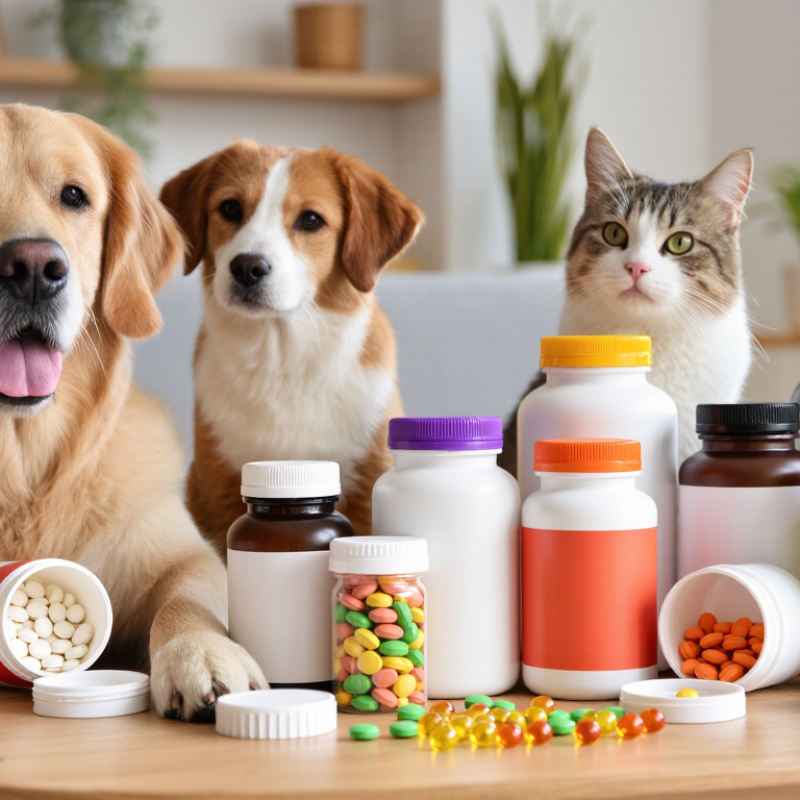
What Are the Top Animal Vitamins in 2026?

What Animal Vitamins Are and How They Support Health

Animal vitamins are micronutrients, not tiny energy drinks. They help regulate vision, bone development, blood formation, and energy metabolism. Vitamin A supports vision and skin; B vitamins help cells process nutrients. Vitamins D and E contribute to bone health and antioxidant protection. Small amounts matter.

Needs vary by species, age, activity, and diet. The National Research Council’s 2006 Nutrient Requirements of Dogs and Cats explains that dogs and cats need dietary vitamin D. Cats also cannot convert beta-carotene into usable vitamin A as people can. One species’ food or supplement plan may not suit another.

Numbers help. FEDIAF’s 2024 Nutritional Guidelines provide vitamin recommendations for dogs and cats per 1,000 kcal of metabolizable energy, showing why calorie intake matters when assessing a diet.

More is not better. Fat-soluble vitamins can accumulate, so adding supplements without checking the complete diet may create excess.

I find labels easier to read than to interpret; a veterinarian can help assess diet, life stage, and health conditions before changes are made.

Essential Vitamin Types and Their Roles in Animals

What Are the Top Animal Vitamins in 2026?

Vitamin needs depend on species, age, diet, and health. The National Research Council’s 2006 Nutrient Requirements of Dogs and Cats sets recommendations separately for each species and expresses many nutrients relative to energy intake. That matters: a puppy, an adult cat, and a grazing animal cannot safely share one vitamin formula. Vitamin A supports vision and immune function. Vitamin D helps regulate calcium and bone development, while vitamin E protects cell membranes from oxidative damage. Vitamin K supports normal blood clotting. Fat-soluble vitamins A, D, E, and K can build up in the body, so excess supplementation may cause harm. More is not always better.

B vitamins help animals release energy from food and maintain healthy nerves, skin, and blood cells. Vitamin C is different: dogs and cats can usually make enough themselves, but other species may have different needs. The FEDIAF 2024 European pet population report estimated about 299 million companion animals in Europe. That scale makes precise, species-specific feeding important. Small details matter. For practical guidance, FEDIAF’s 2024 Nutritional Guidelines and veterinary assessment are more dependable than a universal supplement chart. A real limitation remains: nutrient needs can shift with illness, growth, pregnancy, or an unbalanced home-prepared diet. Check the whole diet before adding vitamins.

How Vitamin Needs Differ by Species, Age, and Health

What Are the Top Animal Vitamins in 2026?

How Vitamin Needs Differ by Species, Age, and Health

There is no universal “best” vitamin. Cats need preformed vitamin A because they cannot convert plant beta-carotene efficiently; dogs can use it. Horses and other grazing animals have different digestive systems, so their diets and supplementation needs differ too. The National Research Council’s Nutrient Requirements of Dogs and Cats (2006) sets separate nutrient allowances by species and life stage. AAFCO’s 2024 nutrient profiles likewise list vitamin minimums per 1,000 kcal, with distinct profiles for adult maintenance and growth or reproduction.

Age changes the picture. Growing animals need carefully balanced diets, while pregnancy and nursing can raise nutrient demands. Older animals may eat less or have conditions that affect absorption. Liver and kidney disease can also change how vitamins are processed. More is not always better: excess fat-soluble vitamins, including A and D, can accumulate. A shiny coat alone is not proof that a supplement is needed.

Tips: Check the complete diet before adding a vitamin. Match advice to the species, age, and health history. Ask a veterinarian to review the food label and any test results, especially when an animal has a chronic condition. A label can look reassuring; it cannot diagnose a deficiency.

How to Evaluate Animal Vitamin Quality and Safety in 2026

What Are the Top Animal Vitamins in 2026?

How to Evaluate Animal Vitamin Quality and Safety in 2026

A reliable evaluation starts with the animal, not the front label. Cats, dogs, horses, and livestock have different nutritional needs. Age, diet, pregnancy, and health conditions can change them further. Check the active ingredients and amounts per serving, not just broad claims like “daily support.” Small details matter. A vitamin designed for one species may be unsuitable for another. Ask a veterinarian before adding supplements if an animal takes medication or has a diagnosed condition. More is not always better.

Look for clear directions, batch numbers, expiry dates, and storage instructions. Quality-focused makers should be able to provide recent, lot-specific testing for ingredient identity and contaminants. A certificate is useful, but it deserves a careful read; paperwork can be hard to interpret. Check whether the tested batch matches the product in your hand. Watch for vague ingredient lists, unsupported health promises, or doses that are difficult to measure. A clean-looking label can still leave questions. Keep the package, note the animal’s response, and stop use if unexpected symptoms appear while seeking veterinary advice.

Top Animal Vitamin Categories to Consider in 2026

In 2026, animal vitamins are best considered by need, species, and life stage—not by popularity alone. A multivitamin may help fill a specific dietary gap, but a complete, balanced food already provides many nutrients. More is not always better. For example, excess fat-soluble vitamins can build up in an animal’s body, so check with a veterinarian before adding them.

Omega-3 supplements are commonly considered for skin, coat, and general wellness. Probiotic products may support digestive balance, especially during routine changes, though results can vary. Joint-support formulas often contain ingredients such as glucosamine; they may suit some older or active animals, but they are not a substitute for assessing pain or mobility changes. Small details matter. A cat and a dog, for instance, should not automatically share the same supplement.

Targeted minerals and vitamins may be useful when a veterinarian identifies a dietary or health need. Puppies, senior pets, and animals eating specially formulated diets can have different requirements. Read the label for species, serving guidance, and active ingredients, then compare it with the animal’s regular food. I’d be cautious about products promising quick fixes; supplement quality and evidence are not always easy to judge. A brief veterinary review can help avoid unnecessary ingredients and unsuitable doses.