Why Choose Inorganic Minerals for Your Business Needs?
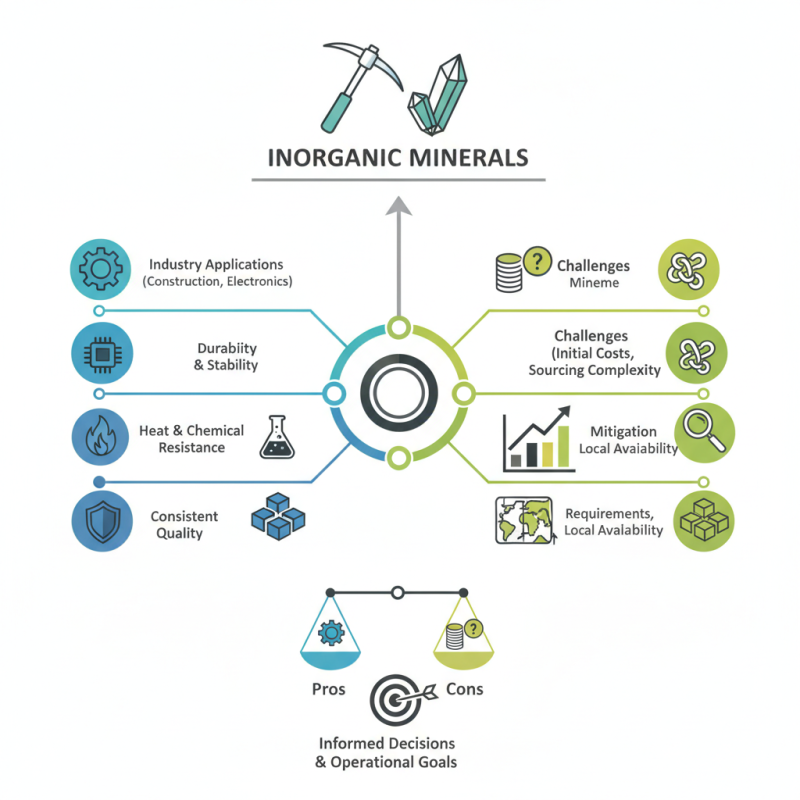
In today's competitive landscape, businesses are increasingly turning to Inorganic Minerals for their unique benefits. These minerals play a crucial role in various industries, from construction to electronics. Their durability and stability make them an attractive choice for companies seeking reliable materials.
Inorganic Minerals offer numerous advantages over their organic counterparts. They are often more resistant to heat and chemicals, which enhances product longevity. Additionally, their consistent quality helps manufacturers maintain high standards. This reliability can significantly influence the overall success of a product in the market.
However, the choice of Inorganic Minerals is not without challenges. Some businesses may hesitate due to the initial costs or the complexity of sourcing these materials. Understanding the specific requirements and local availability can mitigate these concerns. By weighing the pros and cons, companies can make informed decisions that align with their operational goals.
The Role of Inorganic Minerals in Industrial Applications
Inorganic minerals play a crucial role in numerous industrial applications. These materials offer unique properties that enhance the efficiency and durability of products across various sectors. For instance, minerals like magnesium and silica are vital in manufacturing ceramics and glass. They improve heat resistance and structural integrity. This makes them essential for industries focusing on quality and longevity.
The versatility of inorganic minerals extends to the construction industry as well. They are used in cement and concrete, providing crucial strength and stability. As urban development continues, the demand for reliable building materials grows. However, sourcing high-quality inorganic minerals can be a challenge. Companies must ensure they choose suppliers who adhere to rigorous quality standards.
While the benefits are clear, there are considerations to keep in mind. Not all inorganic minerals are created equal. Some might contain impurities that can affect product performance. Businesses must conduct thorough assessments before selecting materials. Understanding the specific needs of their operations is vital. This reflective approach can lead to better decision-making and improved end products.
Key Properties of Inorganic Minerals That Benefit Business Operations
Inorganic minerals play a crucial role in various business sectors. Their unique properties can significantly enhance operational efficiency. Durability is a key characteristic of these minerals. They resist wear and tear, making them ideal for construction materials and industrial applications. This resilience ensures long-lasting performance, reducing maintenance costs.
Moreover, inorganic minerals exhibit excellent thermal stability. This is vital for industries like electronics and manufacturing. They maintain their properties under high temperatures, preventing failures in systems. Additionally, these minerals are often non-toxic and environmentally friendly. This aligns with the growing demand for sustainable practices in many businesses.
While exploring these benefits, it's also important to consider the sourcing process. Responsible mining and extraction practices are essential to minimize environmental impacts. Companies should reflect on their supply chains to ensure they align with sustainability goals. Choosing inorganic minerals requires a thoughtful approach, balancing benefits with ethical considerations.
Why Choose Inorganic Minerals for Your Business Needs? - Key Properties of Inorganic Minerals That Benefit Business Operations
| Property |
Description |
Business Benefit |
| Durability |
Inorganic minerals are generally more resistant to wear and tear than organic materials. |
Lower maintenance costs and longer lifespan of products. |
| Chemical Stability |
Inorganic minerals are less likely to react to environmental changes or chemical exposure. |
Improved safety and reliability of products in various environments. |
| Thermal Resistance |
Many inorganic minerals can withstand high temperatures. |
Enhanced performance in high-heat applications. |
| Non-toxic |
Inorganic minerals are generally non-toxic and safe for use. |
Environmental compliance and safety for workers. |
| Versatility |
Inorganic minerals can be used in a wide range of applications across industries. |
Flexibility to meet diverse business needs and market demands. |
Market Demand Trends for Inorganic Minerals Across Various Industries
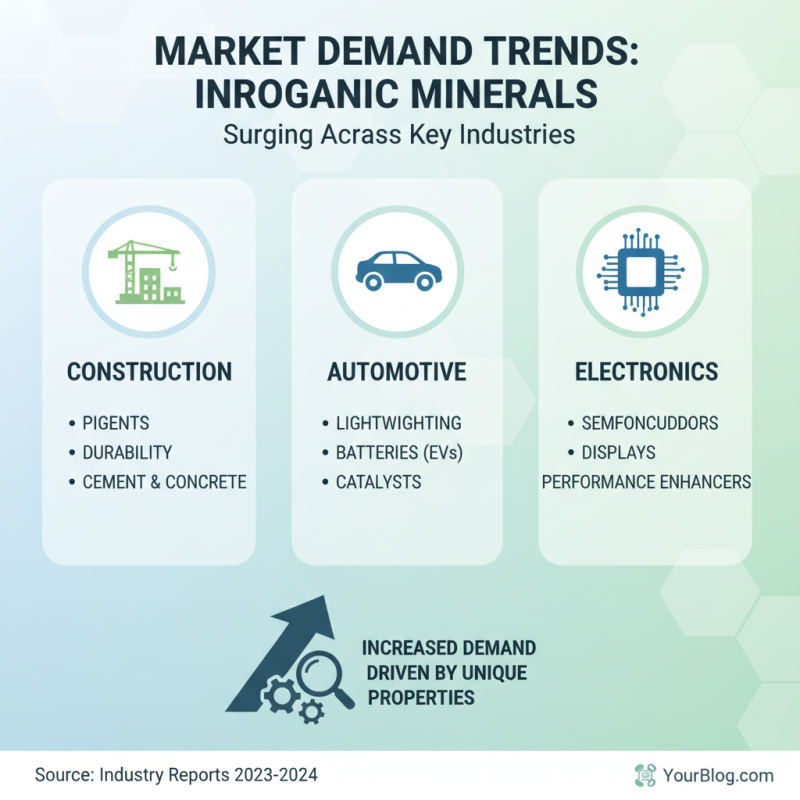
The demand for inorganic minerals is surging across various industries. This rise stems from the minerals' unique properties. Industries such as construction, automotive, and electronics rely heavily on these materials. For instance, inorganic minerals are essential in producing pigments, enhancing durability and performance.
The construction sector particularly values inorganic minerals. They are used in cement, glass production, and as fillers in paints. Their role in enhancing structural strength cannot be overstated. In the automotive industry, inorganic minerals are crucial in creating lightweight materials, reducing fuel consumption. The electronics market also depends on these minerals for semiconductors and insulation.
However, challenges exist in sourcing these minerals. Supply chain disruptions can affect availability. Moreover, not all suppliers maintain the same quality standards. Companies must critically assess their options. Focusing on reliable sources can ensure consistent quality and performance. This complex landscape requires businesses to navigate carefully.
Cost-Effectiveness of Inorganic Minerals vs. Organic Alternatives
In recent years, businesses are increasingly evaluating the cost-effectiveness of inorganic minerals versus organic alternatives. A key advantage of inorganic minerals lies in their pricing structure. According to a 2022 data report from the International Minerals Association, inorganic minerals can be 20-30% more affordable than their organic counterparts. This stark difference is driven by production efficiencies and availability.
When assessing the application of inorganic minerals, one must consider their durability and performance traits. For instance, sodium sulfate, an inorganic mineral, shows higher stability in various temperature ranges compared to organic alternatives. Such inherent characteristics lead to reduced maintenance costs over time, thereby enhancing overall profitability for businesses that utilize them.
However, this cost-effectiveness might come with challenges. Some companies report difficulties in aligning inorganic minerals with sustainable practices. Data from a 2023 sustainability report indicates that while 55% of businesses recognize the advantages of inorganic materials, a significant proportion, 30%, express concerns about environmental impacts. This reflection is vital for businesses seeking to balance cost and sustainability in their material choices.
Sustainability Practices in the Inorganic Minerals Supply Chain
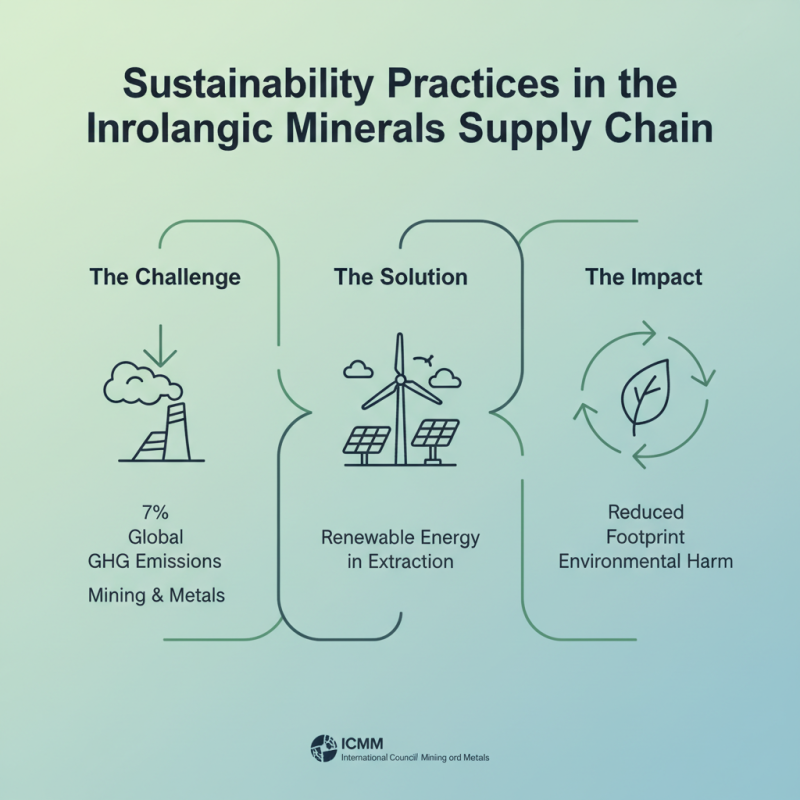
Sustainability is a critical concern in the inorganic minerals supply chain. As industries seek to reduce their carbon footprint, sustainable practices offer a pathway to minimize environmental impacts. According to the International Council on Mining and Metals, mining practices account for nearly 7% of global greenhouse gas emissions. Implementing renewable energy sources in mineral extraction can significantly reduce these figures.
Many businesses are now adopting circular economy principles. This approach involves reusing and recycling materials within the supply chain. For instance, the Global Recycling Foundation reported that recycling minerals could decrease resource consumption by up to 70%. This shift not only conserves resources but also promotes a more responsible use of minerals.
Tip: Collaborate with suppliers who prioritize sustainable practices. Evaluate their policies on waste management and energy use. Engaging with certified suppliers can enhance credibility while promoting a greener supply chain.
While these practices are essential, challenges remain. The transition to sustainable operations may require significant upfront investments. Some companies struggle to meet certification standards. However, failure to adapt can lead to reputational damage and missed market opportunities. Overall, acknowledging these imperfections can drive progress in the industry.