Top 10 Feed Additives for Enhancing Animal Nutrition and Health?
In the world of animal nutrition, Feed Additives play a crucial role. Dr. Emily Carter, a leading expert in animal nutrition, emphasizes, “Quality feed additives can significantly improve animal health and productivity.” These additives enhance the nutritional value of feed, leading to better growth and overall well-being of livestock.
The use of Feed Additives is becoming more common among farmers and producers. Ingredients like probiotics, enzymes, and vitamins are tailored to meet specific dietary requirements. Farmers are often surprised by the positive changes these additives bring. Healthier animals lead to higher yields, but it is essential to choose the right products.
However, an over-reliance on Feed Additives can lead to neglecting natural feeding practices. Some producers may not fully understand the balance between supplementation and natural nutrition. This reveals the need for ongoing education and careful consideration of ingredient choices. As the industry grows, reflecting on these elements is vital for the sustainable development of animal nutrition.

The Importance of Feed Additives in Animal Nutrition
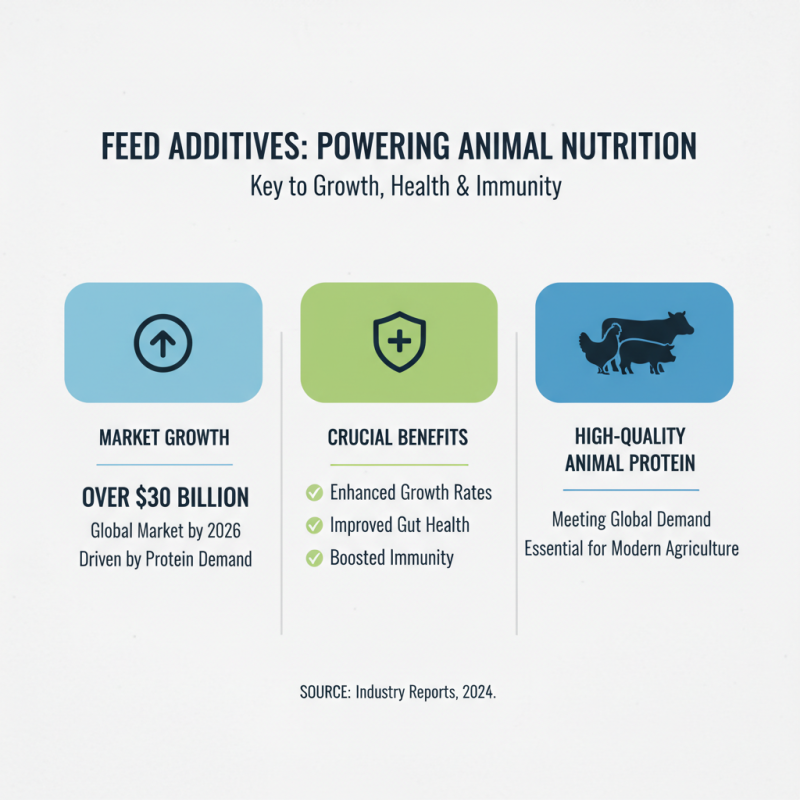
The importance of feed additives in animal nutrition cannot be overstated. Reports indicate that the global feed additives market is projected to reach over $30 billion by 2026. This growth is largely driven by the increasing demand for high-quality animal protein. Feed additives play a crucial role in enhancing growth rates, improving gut health, and boosting overall immunity.
Additives such as probiotics and enzymes have become essential. Probiotics can enhance digestion and nutrient absorption. These can lead to better weight gains in livestock. Enzymes improve feed efficiency, which can significantly lower feeding costs. A study revealed that using specific enzyme blends could improve feed conversion rates by up to 10%. However, not all additives are effective for every type of livestock.
While there are many benefits to using feed additives, it's important to recognize challenges. Some additives do not perform as expected. This inconsistency can lead to financial losses for farmers. Adjusting feeding strategies to maximize these additives’ impacts is necessary but often overlooked. Continuous research and adaptation will be essential for leveraging the full potential of feed additives in animal nutrition.
Types of Feed Additives Used in Livestock Diets
Feed additives play a vital role in livestock diets. They enhance nutrition and overall health. Several types can be used. These include vitamins, minerals, probiotics, and enzymes. Each type addresses specific needs in animal diets.
Vitamins are crucial for growth and digestion. Minerals support skeletal development and metabolic processes. Probiotics improve gut health, promoting nutrient absorption. Enzymes aid in breaking down nutrients, making them more accessible. For instance, adding enzymes can significantly enhance the digestibility of grains.
Tip: Always monitor results when introducing new additives. Changes may take time. It's essential to keep a record of performance. Regular assessments help you adjust accordingly.
Consistency is key in using feed additives. However, not every additive will work for every farm. Some additives may show limited effects on certain livestock groups. Observing your animals' responses will guide you. Pay attention to their health and productivity. Adjust your approach based on these observations.
Top 10 Feed Additives for Enhancing Animal Nutrition and Health
| Feed Additive |
Type |
Primary Benefit |
Commonly Used In |
| Probiotics |
Microbial Additive |
Enhances gut health |
All livestock |
| Prebiotics |
Dietary Fiber |
Stimulates beneficial bacteria |
Dairy cattle, pigs |
| Enzymes |
Digestive Aid |
Improves nutrient digestibility |
Poultry, swine |
| Mineral Supplements |
Micronutrients |
Supports metabolic processes |
All livestock |
| Vitamins |
Micronutrients |
Boosts immune function |
All livestock |
| Acidifiers |
pH Regulators |
Reduces pathogen load |
Pigs, poultry |
| Antioxidants |
Preservatives |
Protects fats from oxidation |
All livestock |
| Flavors and Sweeteners |
Palatability Enhancers |
Increases feed consumption |
All livestock |
| Fat Sources |
Energy Boosters |
Enhances energy density |
All livestock |
Top Nutrient-Rich Feed Additives for Enhanced Animal Health
When it comes to improving animal health, nutrient-rich feed additives play a crucial role. These additives can enhance digestion and boost overall well-being. Common choices include probiotics and prebiotics, which support gut health. They help balance the stomach's microbial population. This often leads to better nutrient absorption.
Antioxidants are also valuable. They protect animals from oxidative stress. This can improve resistance to diseases. Vitamins and minerals like zinc and selenium are vital for immune function. Inclusion of these nutrients keeps livestock strong and healthy. Many farmers notice improvements in weight gain and production.
However, not all additives work the same for every animal. Some may experience digestive upset initially. It’s important to monitor their reactions closely. Adjusting the types or amounts may be necessary. Continuous evaluation is key to finding the best combinations and ensuring optimal health outcomes.
The Role of Probiotics and Prebiotics in Animal Feed
Probiotics and prebiotics play a critical role in animal nutrition. These feed additives help improve digestive health and nutrient absorption. According to the International Journal of Animal Science, up to 70% of gut health is influenced by these microorganisms. Probiotics are live bacteria that balance gut flora, while prebiotics serve as food for these beneficial bacteria.
Research indicates that incorporating probiotics into animal feed can lead to a 12-15% increase in weight gain. In poultry, these additives can reduce mortality rates by up to 10%. However, not all probiotics are equally effective. Some strains might not survive the processing or storage conditions. This inconsistency can lead to less predictable outcomes.
On the flip side, prebiotics can enhance gut function by promoting beneficial bacteria growth. Studies show that they can boost immunity and overall health. Yet, the formulation of prebiotics often requires careful consideration. The wrong types may not yield the desired benefits or even lead to digestive upset. This inconsistency points to a need for more research in this area. Understanding the right combinations is vital for effective use.
Top 10 Feed Additives for Enhancing Animal Nutrition and Health
Future Trends in Feed Additive Research and Development
Recent trends in feed additives focus on enhancing animal nutrition and health. Researchers are exploring innovative ingredients and technologies. Natural additives gain popularity, driven by consumer demand for sustainable practices. Incorporating these additives can improve gut health and bolster immunity.
Tips: Look for additives that support digestive efficiency. They can lead to better nutrient absorption, impacting animal growth positively. Keep an eye on emerging research to stay updated on effective options.
Alternative protein sources are also being developed. As the industry faces challenges like feed costs and sustainability, plant-based additives show promise. These sources may reduce reliance on traditional animal proteins while supporting animal health.
Reflecting on the balance between innovation and cost is crucial. Not every new additive will suit all production systems. Evaluate their practicality carefully before integration.