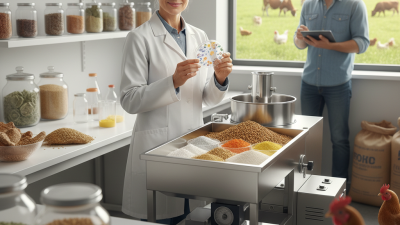
Finding a top Digestarom Poultry supplier in China takes more than comparing prices or reading a product page. Poultry producers need reliable supply, clear product information, and support that fits their operation. A useful comparison starts with practical questions: Can the supplier provide current specifications and batch documents? Are storage instructions clear? Can its team explain how the product fits a farm’s feeding program? These details matter when feed is mixed daily and small inconsistencies can disrupt routine work.
Look for documented quality controls, traceable batches, responsive technical service, and straightforward communication. Ask how orders are handled, what delivery timelines apply, and whom to contact if a shipment arrives with damaged packaging. A supplier should answer specific questions without relying on broad promises. Where possible, verify claims through product records, references, and direct discussions with qualified staff. No ranking is perfect. Supplier performance can vary by order, region, and time, so one good conversation is not enough evidence. That distinction matters.
This guide explores how to assess potential Digestarom Poultry suppliers in China and what information buyers should request before making a decision. It does not assume that one company is automatically the best for every farm. A supplier that suits a large integrator may not serve a smaller operation equally well. Compare the evidence, check the details, and note what remains uncertain. Some points are easy to miss. A careful review can help buyers choose with greater confidence, while leaving room to reassess as needs change.

In poultry diets, aromatic plant compounds are used as functional feed ingredients, not as replacements for balanced nutrition. Their distinctive scents can influence how birds respond to feed, while selected compounds may support digestive processes. The practical aim is steady feed consumption and efficient nutrient use. Results vary. Age, housing conditions, diet composition, and bird health all matter. A pleasant aroma alone cannot correct poor feed quality or management.
For a poultry operation, the ingredient’s role should be assessed through careful observation. Compare feed intake, litter condition, flock uniformity, and growth records across similar groups. Keep other diet and management changes consistent where possible. That matters. Product composition and inclusion rates should be clearly documented, and claims should match reliable evidence. A supplier should provide traceable specifications and practical guidance for storage and mixing. Small details count: heat, moisture, and uneven blending can affect ingredient stability. Aromatic additives may be useful, but their effects are not automatic. I would treat them as one part of a nutrition plan, then review flock data before deciding whether they earn their place.

The chart shows historical NRC reference crude-protein levels for broiler diets: 23% for starter, 20% for grower, and 18% for finisher. Actual formulations vary with bird genetics, feed ingredients, and production goals. Balanced nutrition and effective nutrient utilization are important throughout each stage.
A leading poultry-feed additive supplier in China should offer more than a competitive quotation. The OECD-FAO Agricultural Outlook 2024–2033 projects poultry meat to provide about 41% of global meat protein by 2033. This rising demand makes consistent product quality essential. Buyers should review batch specifications, ingredient traceability, stability data, and independent laboratory results. Ask how the supplier monitors variation between shipments. A polished brochure is not evidence.
Technical support matters, too. Strong suppliers provide clear inclusion guidance, storage instructions, and trial protocols suited to local feed ingredients and farm conditions. Check whether staff can explain results using measurable indicators, such as feed conversion and flock uniformity. Request references from comparable poultry operations, while protecting their confidential information. No supplier is perfect. Even good documentation can leave practical questions unanswered, so test the product under controlled conditions before wider use.
Tips: Compare recent certificates of analysis with actual samples. Confirm response times for technical queries, and record trial conditions carefully. Small details matter. A supplier that welcomes scrutiny may be more dependable than one making broad performance promises.
A strong Chinese poultry supplier is not defined by a polished catalogue alone. Look for documented manufacturing experience, stable sourcing, and clear batch records. A capable supplier can explain how ingredients are selected, blended, tested, and stored. Ask for current specifications and representative quality documents. Details matter.
Its range may include botanical feed additives, premixes, and complementary nutrition products for broilers and layers. Poultry expertise shows in practical guidance: inclusion rates, mixing order, storage conditions, and compatibility with common feed ingredients. A technical adviser should ask about flock age, diet composition, and farm routines before making a recommendation. No generic promise fits every poultry house.
Check whether the supplier can trace raw materials and investigate quality complaints through recorded procedures. Request a sample, review its label, and compare batch documents with the quotation. Assess performance through farm observations, such as feed intake, litter condition, and growth records. Results can vary. Even experienced suppliers may have gaps, so ask what evidence supports each claim and what remains uncertain.
| Evaluation Dimension | What a Qualified Supplier Should Demonstrate | Evidence to Request | Why It Matters for Poultry Production |
|---|---|---|---|
| Supplier background | Clear information about manufacturing or distribution activities, product origin, and the supplier’s role in the supply chain. | Business and facility documentation, product-origin details, and references that can be independently checked. | Helps buyers understand who is responsible for product consistency, documentation, and after-sales support. |
| Poultry product range | Products appropriate to the stated application, which may include premixes, vitamins and minerals, feed enzymes, probiotics, organic acids, or other feed additives. | Product specifications, ingredient information, intended use, storage conditions, and applicable feeding instructions. | Broilers, layers, and breeders have different production goals and nutritional requirements; product suitability should be assessed for each use. |
| Production-stage expertise | Ability to discuss feed programs for relevant stages, such as broiler starter, grower, and finisher diets or layer rearing and laying phases. | Stage-specific technical materials and examples of how recommendations are adapted to the customer’s feed formulation and production conditions. | Feed management needs change with age, production purpose, and farm conditions. |
| Quality assurance | Documented procedures for raw-material checks, batch control, traceability, and handling customer complaints. | Quality certificates where applicable, batch-specific certificates of analysis, and a written traceability or recall procedure. | Consistent specifications and traceable batches support safer, more reliable feed production. |
| Regulatory documentation | Documentation appropriate to the product category and the intended market, including compliant labels and permitted-use information. | Product labels, technical data sheets, safety information where applicable, and current registration or approval documents when required. | Requirements can differ by product type and destination market, so documentation should be checked before purchase. |
| Technical support | Access to staff who can explain product use, inclusion rates, compatibility, and practical feed-mill or farm considerations. | Written technical guidance, clear contact channels, and a defined process for investigating performance concerns. | Correct application depends on the product, ration, equipment, and production environment. |
| Trial and performance evaluation | Willingness to agree on measurable evaluation criteria rather than making unsupported performance guarantees. | A trial plan that defines the control group, duration, flock conditions, data collection, and interpretation of results. | Farm-level outcomes are influenced by many factors, including genetics, health, housing, and management. |
| Supply and service reliability | Transparent information about order lead times, minimum order quantities, storage, delivery, and issue resolution. | Written quotations, delivery terms, product shelf-life details, and service-response expectations. | Reliable planning helps reduce the risk of feed-program interruptions. |
This table presents general supplier-evaluation criteria, not a verified ranking or profile of a specific company. Confirm all product claims, certifications, and regulatory documents directly with the supplier.
A dependable poultry-feed supplier in China should make quality visible, not merely promise it. Ask for a current specification sheet, a batch-specific certificate of analysis, and clear limits for moisture, particle size, and microbial counts. Check whether the listed tests match the product’s intended use. Small details matter: a sealed sample, readable lot code, and consistent aroma can reveal handling problems before a full shipment arrives. Paperwork is not proof by itself. Check every lot.
Regulatory compliance needs destination-specific review. Confirm ingredient status, labeling language, safety data, and required import documents with qualified local advisers. Requirements can differ between markets and change over time. A supplier should answer technical questions promptly and provide traceability from production lot to dispatch. Request audit records where available, and verify them rather than accepting a polished PDF. This takes time.
Supply reliability is measured across ordinary weeks, not just during a sales call. Compare quoted lead times with shipment history, stock planning, packaging strength, and backup production arrangements. Ask how delays or out-of-spec results are reported, and whether retained samples support investigation. Even a capable supplier may have gaps; I would treat vague answers about testing or delivery as a reason to pause, not as a minor issue. That is not easy.
A reliable poultry feed-additive supplier should provide documents you can check, not just polished claims. Ask for current business and manufacturing records, product specifications, batch certificates of analysis, and a clear explanation of ingredient traceability. Compare the batch number on a sample label with its test report. Check whether the stated shelf life, storage conditions, and usage directions match your farm’s needs. Small details matter.
Fit depends on your birds and daily routines. Share their age, feed program, housing conditions, and production goals with the supplier’s technical team. Ask how recommendations are supported, and whether a small, controlled farm trial is practical before wider use. Keep records of feed intake, egg output or weight gain, and any changes in bird condition. Results can vary with management and diet, so one good week proves little. I would also speak with two existing poultry customers, if possible. A supplier may have strong paperwork yet respond slowly when a delivery is delayed; that is worth checking. No checklist removes every risk.