How to Increase Calcium Intake for Stronger Bones?
Calcium plays a vital role in maintaining strong bones and overall health. Dr. Emily Johnson, a renowned nutritionist, states, "Calcium is the backbone of bone strength." However, many people struggle to meet their daily calcium needs. It can be challenging to incorporate adequate sources of calcium into your diet.
Various food options are available to boost calcium intake. Dairy products, leafy greens, and fortified foods are some excellent sources. Yet, not everyone enjoys or can access these foods. This limitation can lead to uncertainties about maintaining bone health. Individuals must reflect on their dietary habits and adapt them to include more calcium-rich options.
Furthermore, supplements may be considered, but they are not a substitute for a healthy diet. Some people may rely too heavily on pills without understanding their dietary needs. It's essential to continuously evaluate and improve calcium consumption. Striking a balance between diet and supplementation is key for strong bones throughout life.

Understanding the Role of Calcium in Bone Health
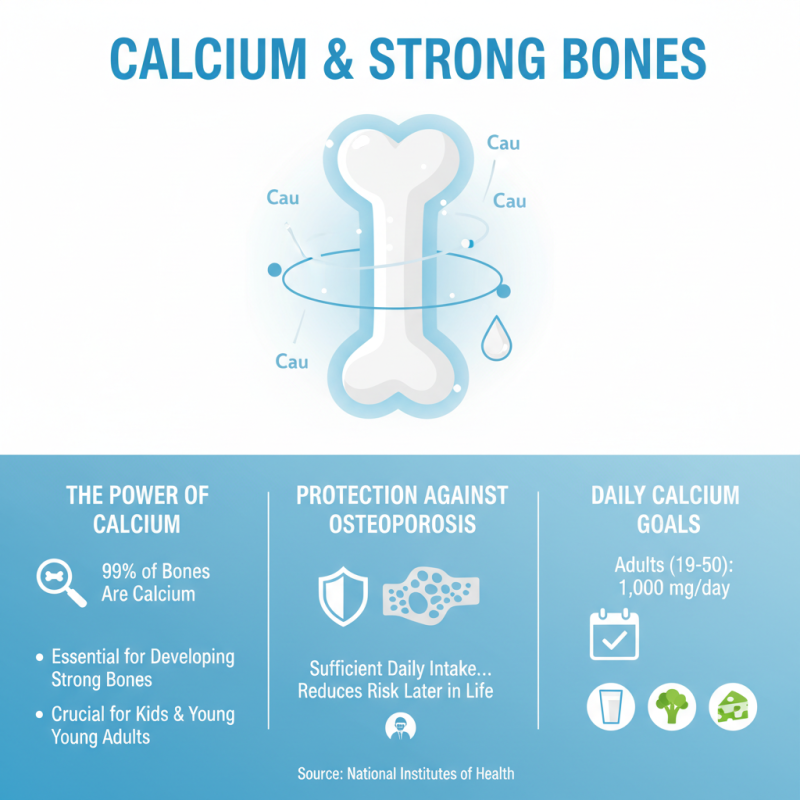
Calcium plays a crucial role in bone health. Bones are approximately 99% calcium. It is vital for developing strong bones, especially in children and young adults. According to the National Institutes of Health, a sufficient daily intake of calcium helps reduce the risk of osteoporosis later in life. Adults aged 19-50 should aim for 1,000 mg daily.
Tips: Incorporate dairy products or leafy greens. A cup of yogurt provides around 300 mg of calcium. Beans and almonds are also good sources. Be mindful of your dietary choices. Many consume less calcium than required. Checking food labels can help track your intake.
Beyond diet, consider supplements if necessary. However, overuse can lead to health issues. Balance is key. Regular weight-bearing exercises strengthen bones too. Aim for at least 30 minutes of this activity most days. Engaging in activities like walking or dancing can be enjoyable. Reflect on your lifestyle choices. Are you getting enough calcium? The answer could shape your bone health significantly.
Identifying Calcium-Rich Food Sources for Daily Diet
Calcium is essential for strong bones. Many people don't consume enough calcium daily. The recommended intake for adults is 1,000 mg, increasing to 1,200 mg for women over 50 and men over 70. Foods rich in calcium are crucial for achieving these goals.
Dairy products like milk and yogurt are well-known sources. A cup of yogurt contains approximately 300 mg of calcium. Leafy greens, such as kale and spinach, offer good plant-based options, though their absorption rates vary. For example, a cup of cooked collard greens provides around 250 mg. Fortified foods, like orange juice and cereals, can also help. However, many people forget these sources in their diets.
Canned fish with bones, like sardines, packs a powerful punch. A typical serving can contain up to 400 mg of calcium. Not all calcium is created equal, though. Some fortified options may not be fully absorbed by the body. This complexity can lead to confusion, and diet plans may fall short. Regularly including these calcium-rich foods can improve bone health, but awareness and planning are key.
Incorporating Supplements for Increased Calcium Intake
Incorporating supplements can significantly boost your calcium intake. Many people struggle to consume enough calcium through diet alone. This is especially true for those who are lactose intolerant or have dietary restrictions. Calcium supplements can fill the gaps that food might leave behind. They come in various forms, including tablets, chewables, and liquids.
Choosing the right supplement can be tricky. Some people may find large tablets hard to swallow. Others might experience stomach discomfort. It's important to test different types to find what works best for you. Keep in mind the recommended daily intake. Too much calcium can lead to health issues, so moderation is key.
Also, consider combining supplements with dietary sources. Leafy greens, almonds, and fish are excellent additions. Being mindful of your overall diet is crucial. Balance is vital for achieving strong bones. Regular check-ups with a healthcare provider can help assess your calcium levels. Reflect on your progress and adjust as needed. Remember, your journey to stronger bones is ongoing.
Lifestyle Changes to Enhance Calcium Absorption
Calcium is vital for robust bones. To maximize calcium absorption, making targeted lifestyle changes is crucial. Research indicates that approximately 1.2 billion people worldwide suffer from calcium deficiency, affecting bone health. Ensuring your body absorbs calcium efficiently can lead to stronger bones over time.
Diet plays a role. Consuming vitamin D-rich foods alongside calcium can enhance absorption. Sunlight exposure is another key factor. Just 15 minutes of sunlight can boost your vitamin D levels significantly. Combine leafy greens, dairy, and fish in your meals for a more balanced diet.
Tip: Try to limit caffeine intake. Excessive caffeine can hinder calcium absorption. Aim for no more than 2-3 cups of coffee daily. Also, avoid excessive sodium, which can lead to calcium loss through urine. Small adjustments can lead to big benefits.
Lastly, consider incorporating physical activity into your daily routine. Weight-bearing exercises, like walking or jogging, stimulate bone health. Aim for at least 30 minutes of exercise most days. Making these lifestyle changes can deeply influence your calcium absorption and overall bone strength.
Monitoring Calcium Intake and Maintaining Bone Density
Monitoring calcium intake is crucial for maintaining bone density. Experts recommend that adults consume 1,000 to 1,200 mg of calcium daily. Most Americans, however, fall short, with studies showing that 68% do not meet their calcium needs. This deficiency can lead to weakened bones and increased fracture risk.
Regular monitoring of calcium intake can help address this issue. Tracking dietary sources is essential. Dairy products, leafy greens, and fortified foods are rich in calcium. However, many people overlook non-dairy sources like almonds and tofu. A common mistake is assuming that supplements alone can replace a balanced diet. Too much reliance on supplements often leads to imbalances in other nutrients.
Research indicates that maintaining adequate calcium levels can significantly impact bone health. A study showed that individuals with optimal calcium intake had up to 50% lower rates of bone loss. Still, not everyone can achieve this. Lifestyle factors such as activity level and vitamin D intake also play a role. Regular weight-bearing exercise, combined with sufficient calcium, is vital for stronger bones. With a holistic approach, we can all work towards better bone health.