How to Choose the Right Feed Additives for Optimal Animal Health?
Choosing the right feed additives is crucial for optimal animal health. Feed additives play a critical role in improving livestock productivity and well-being. According to the latest industry reports, the global feed additives market was valued at approximately $40 billion in 2022, with a projected annual growth rate of 4.5% through 2028.
Selecting suitable feed additives requires careful consideration. Different additives serve various purposes, such as enhancing growth, digestion, and immune function. For instance, probiotics can improve gut health, while vitamins can boost overall immunity. However, not all additives are equally effective or necessary. Some could lead to regulatory concerns or unintended side effects, highlighting the importance of thorough research.
Farmers and producers must reflect on their choices. Each decision impacts animal health, farm sustainability, and profit margins. Avoiding a one-size-fits-all approach is essential. Customizing feed additive choices can lead to better outcomes. Gathering expert advice and leveraging data can support informed decisions in this ever-evolving industry. The right feed additives can transform livestock farming, ensuring animals thrive and produce efficiently.
Understanding the Role of Feed Additives in Animal Nutrition
Feed additives play a critical role in animal nutrition. They enhance the overall health and efficiency of livestock. Including them can improve digestion and nutrient absorption. For example, probiotics can support gut health. They help animals absorb vitamins and minerals more effectively. This leads to better growth rates and higher productivity.
Selecting the right feed additives requires careful consideration. Not all additives suit every type of animal or farming operation. Some additives may have unwanted side effects. It’s essential to evaluate their benefits and potential risks. Analyzing specific dietary needs is vital. Some animals may require more protein, while others benefit from increased fiber. The right balance is crucial to avoid deficiencies.
There’s no one-size-fits-all solution. Each farm has unique challenges. What works well in one setting may not yield the same results in another. Regularly reviewing feed formulations is essential. Adjustments may be necessary as animals grow or seasons change. Keeping an open mind and being willing to experiment can lead to better outcomes. It’s a continuous journey of learning and adjustment.
Types of Feed Additives and Their Benefits for Animal Health
Choosing the right feed additives can greatly enhance animal health. Various types of additives serve different purposes. Probiotics are one popular option. They support gut health and improve digestion. Animals with better gut flora tend to absorb nutrients more efficiently.
Another effective type is prebiotics. These compounds feed beneficial bacteria in the gut. This can lead to improved immunity and overall well-being. Moreover, enzymes assist in breaking down feed components. They can make nutrients more accessible, promoting growth and health.
Tip: Always assess the specific needs of your animals. Different species and breeds may have unique requirements. Regularly consult with a nutritionist to tailor the mix appropriately. Monitor how your animals respond to these additives. Their health can reflect the effectiveness of your choices. Keep it a learning process; what works beautifully today may need adjustments tomorrow.
Assessing the Nutritional Needs of Different Animal Species
Assessing the nutritional needs of various animal species is crucial for optimal health. Each species has unique dietary requirements. For example, ruminants like cattle need a high fiber diet to support their digestive processes. According to the National Research Council, the ideal fiber level for cattle should be around 25-30%. Too little fiber can lead to health issues, like acidosis.
Poultry, on the other hand, require balanced levels of protein and energy. A report from the Feed Research Institute indicates that broilers thrive on a diet consisting of 20-24% protein during their growth phase. Misjudging protein needs can stifle growth rates. Swine diets also vary significantly, needing careful formulation. Studies have shown that properly tailored additives can enhance the growth performance of pigs. Inadequate mineral balance, particularly calcium and phosphorus, can lead to skeletal issues.
It's not always easy to choose the right feed. Many farmers struggle with understanding the specific needs of their animals. Sampling and analyzing feed ingredients can help identify gaps in nutrition. Some additives may not suit every species. Experimentation is often necessary to find the right balance, which requires ongoing effort and adaptation.
Factors to Consider When Selecting Feed Additives
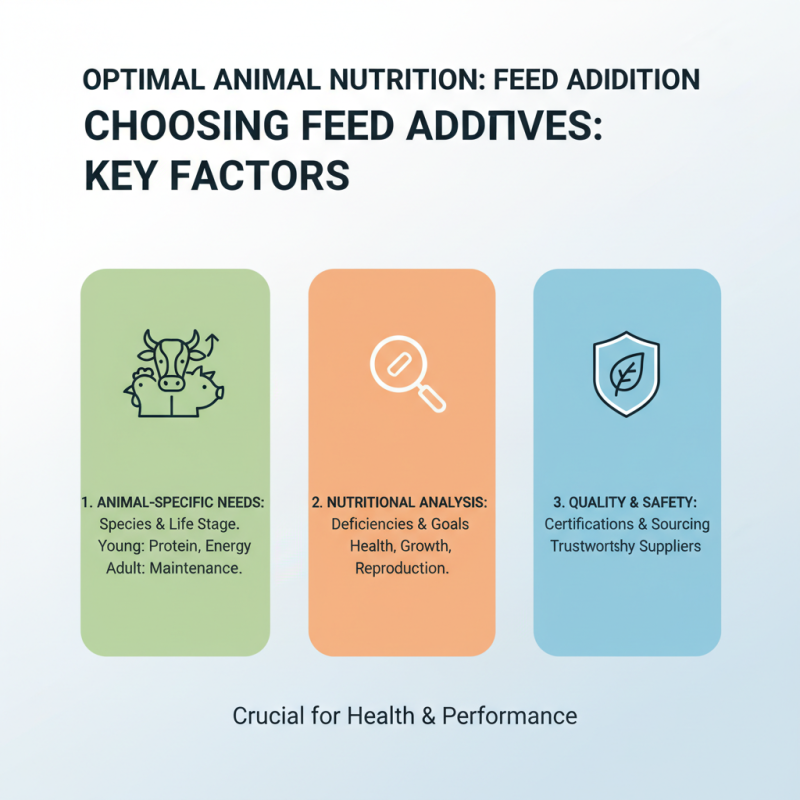
Choosing the right feed additives is crucial for animal health. There are several factors to consider to ensure optimal results. First, analyze the specific nutritional needs of the animals. Different species and stages of growth require different additives. For instance, young animals need more protein and energy boost than adults.
Consider the source of ingredients. Natural additives may have fewer side effects compared to synthetic ones. However, they can be less potent. Some farmers may notice reduced performance with natural options. Feedback from peers can be valuable, but remember not every solution works for every situation.
Cost is another important factor. While premium additives may promise better results, they must fit your budget. Sometimes, the cheaper options perform just as well. Researching the long-term benefits can be helpful. Throughout this process, keep in mind that no one-size-fits-all solution exists. Reflection on past choices can lead to better decisions in the future.
Evaluating the Safety and Efficacy of Feed Additives for Livestock
When evaluating the safety and efficacy of feed additives for livestock, careful consideration is essential. Data from the Animal Nutrition Institute indicates that around 30% of livestock farmers question the safety of certain additives. Choosing the right additive can significantly influence animal health and productivity. It’s important to analyze the ingredients and their sources thoroughly.
Tip: Always consult with a veterinarian or a livestock nutritionist before making changes to your feed. They can help identify the most suitable additives for your specific livestock needs.
Additionally, recent studies show that certain probiotics can improve gut health by up to 25%. However, not all additives deliver consistent results across different farms. Variability in animal response highlights the importance of customized feeding strategies. Some additives may enhance weight gain, while others could lead to unforeseen health issues.
Tip: Monitor your livestock regularly after introducing a new additive. Look out for any changes in behavior or health. It’s crucial to adjust your approach based on these observations. Balancing between innovation and caution will yield the best results for livestock health.
How to Choose the Right Feed Additives for Optimal Animal Health?
| Feed Additive |
Main Benefits |
Safety Profile |
Efficacy Rating |
Recommended Species |
| Probiotics |
Improve gut health, enhance digestion |
Generally recognized as safe |
High |
Pigs, Poultry, Cattle |
| Enzymes |
Increase nutrient availability, reduce feed costs |
Well-studied, low risk |
Moderate to High |
Cattle, Poultry |
| Organic Acids |
Preserve feed quality, improve gut health |
Generally safe when used properly |
High |
Pigs, Poultry |
| Antioxidants |
Protect against oxidative stress, enhance shelf life |
Generally recognized as safe |
High |
All Species |
| Mineral Supplements |
Correct mineral deficiencies, support overall health |
Safe when dosed correctly |
Moderate |
All Species |