How to Choose the Best Feed Acidifier for Your Livestock?
Choosing the right Feed Acidifier for livestock is crucial for optimal animal health and performance. According to a recent report by the International Feed Industry Federation, the global feed acidifier market has grown by 15% over the past three years. This significant growth reflects the increasing awareness of feed acidifiers' role in gut health and nutrient absorption.
Dr. Jane Smith, an expert in animal nutrition, emphasizes, "Selecting the right Feed Acidifier can dramatically improve feed conversion rates." Her insights highlight the importance of informed decision-making in this area. The variety of products available can be overwhelming. Factors such as the type of livestock, dietary needs, and specific health challenges must be considered.
While many producers rely on generic solutions, a tailored approach may yield better results. Animal performance is not only driven by basic nutrition but also by the digestive environment. Some livestock may react differently to various acidifiers, making adjustments necessary. Each choice might not be perfect, and refining strategies is part of the process. Taking time to evaluate options can lead to improved outcomes in livestock management.

Understanding the Role of Feed Acidifiers in Livestock Nutrition
Feed acidifiers play a crucial role in livestock nutrition. They enhance digestion and nutrient absorption. This results in better growth rates and overall health. Studies show that including acidifiers can reduce feed conversion ratios by 5-15%. Lower feed costs translate to higher profitability for farmers.
Adding acidifiers can lead to improved gut health. They help maintain a balanced gut microbiota, essential for effective digestion. However, not all acidifiers are equal. Selecting the right one requires careful consideration of your specific livestock needs and how different acids impact performance. Some acidifiers may cause digestive upset when introduced abruptly.
Tips: Monitor animal response closely after adding an acidifier to the diet. Gradual introduction can minimize stress. Also, consider the overall formulation of the feed. A well-balanced diet enhances the positive effects of acidifiers. Regularly review your feed program based on current research to ensure optimal results.
How to Choose the Best Feed Acidifier for Your Livestock?
| Feed Acidifier Type |
Benefits |
Common Application |
Recommended Dosage |
| Organic Acids (e.g., Acetic Acid) |
Improves gut health, reduces pathogenic bacteria |
Poultry and Swine |
1-2% of total feed weight |
| Propionic Acid |
Inhibits mold growth, maintains feed quality |
Silage, Dry Feeds |
0.5-1% of total feed weight |
| Fumaric Acid |
Enhances nutrient absorption, boosts energy |
Ruminants |
0.3-0.5% of total feed weight |
| Lactic Acid |
Improves digestion, supports microbial balance |
All Livestock |
1-2% of total feed weight |
| Citric Acid |
Improves palatability, enhances mineral absorption |
All Livestock |
0.5-1.5% of total feed weight |
Types of Feed Acidifiers and Their Benefits for Different Livestock
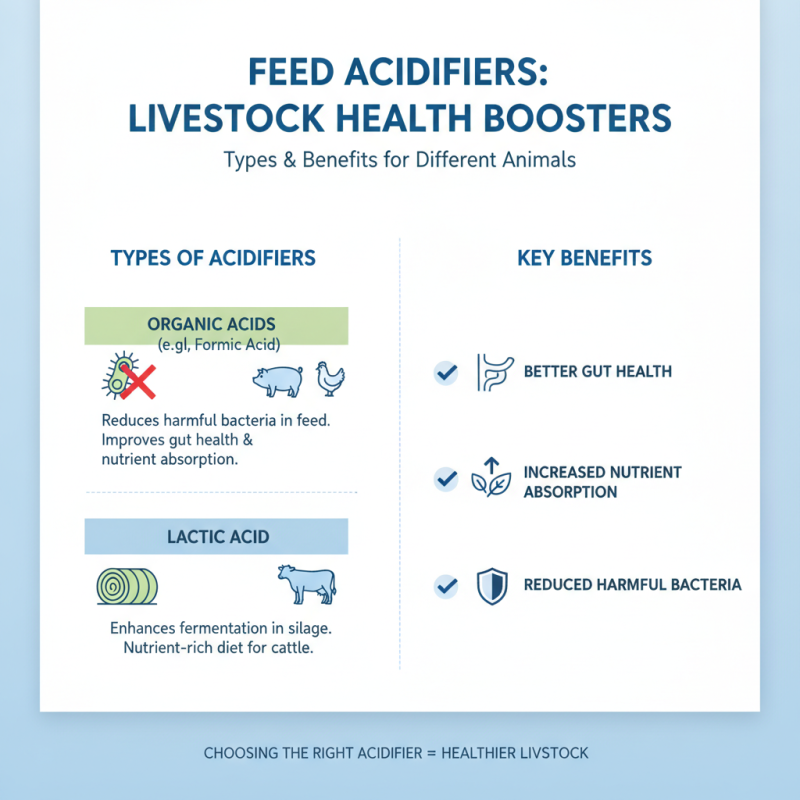
Choosing the right feed acidifier is crucial for livestock health. Various types of acidifiers serve different purposes. Organic acids, like formic acid, help reduce harmful bacteria in feed. They can improve gut health and nutrient absorption in pigs and poultry. Meanwhile, lactic acid enhances fermentation in silage for cattle, ensuring a nutrient-rich diet.
Tips: Always test the pH levels of your feed. Adjust based on the specific needs of your livestock. Monitor your animals for any signs of discomfort after starting new feed additives. This observation will help you refine your feeding strategy.
Mineral-based acidifiers, on the other hand, can stabilize feed and improve shelf-life. Adsorption of mycotoxins is also possible, reducing potential health risks. However, overuse may lead to digestive upset. Finding the right balance is key.
Tips: Consult with a nutritionist or veterinarian when selecting acidifiers. They can provide insights based on your livestock's unique requirements. Keep accurate records to see which products yield the best results. This will guide you in making informed choices in the future.
Factors to Consider When Selecting a Feed Acidifier
When selecting a feed acidifier, several key factors deserve attention. The type of livestock being raised significantly influences the acidifier's effectiveness. For example, research shows that swine may benefit from different acidifiers than poultry. According to a 2022 report by the Journal of Animal Science, acidifiers can improve feed efficiency by up to 10% in specific livestock species.
Consider the necessary pH level for your livestock's gut health. A lower pH can enhance nutrient absorption, supporting growth. However, excessively low pH can harm beneficial microbes. Data from the International Journal of Poultry Science indicates that controlling pH can reduce enteric diseases by 25%. Assessing the quality of raw materials is also vital. Impurities can vary in effectiveness, leading to inconsistent results.
Efficacy alone does not guarantee success. Price and availability matter too. If a product is not accessible, it cannot be utilized. Operators should also contemplate environmental impacts. Some acidifiers may produce unwanted emissions or residues. Reflecting on these aspects is crucial in making informed decisions for your livestock's health and your operation's sustainability.
Evaluating the Effectiveness of Feed Acidifiers in Livestock Diets
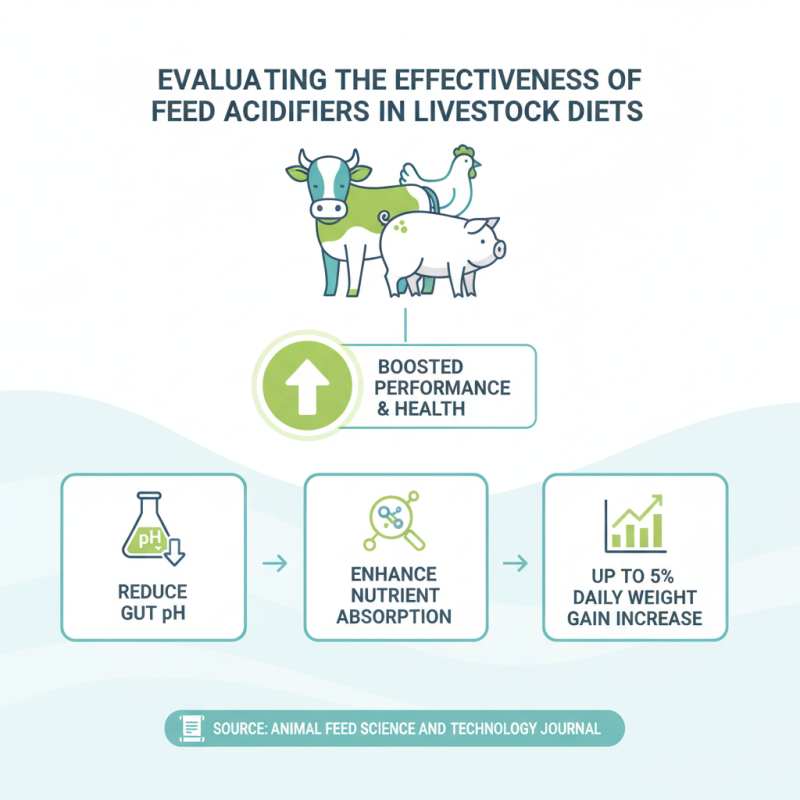
Feed acidifiers play a crucial role in livestock diets, often boosting performance and health. Research shows that acidifiers can reduce gut pH, enhancing nutrient absorption. A study published by the Animal Feed Science and Technology Journal indicates that livestock consuming feed acidifiers can see up to a 5% increase in daily weight gain.
However, not all acidifiers yield the same results. Efficacy depends on factors like species, age, and diet composition. Some acidifiers focus on improving microbial balance, while others target digestive efficiency. A report from the Association of American Feed Control Officials supports that the best results are obtained when acidifiers match the specific needs of the livestock.
Tip: Always consult a nutritionist to identify an appropriate acidifier based on livestock type.
In evaluating feed acidifiers, consider the cost-effectiveness over time. An expensive acidifier may not always lead to significant benefits. Monitoring livestock performance can provide insights into the effectiveness of the chosen acidifier. Sometimes, the expected outcomes might not match reality. Continuous assessment can guide necessary adjustments.
Tip: Regularly assess overall livestock health to determine if your feed strategies are effective.
Best Practices for Implementing Feed Acidifiers in Animal Feeding Programs
When implementing feed acidifiers in animal feeding programs, producers must consider several best practices. The right acidifier can enhance feed digestibility and improve gut health. However, mismatched application can lead to subpar results. Knowing the specific needs of your livestock is crucial. Analyze their health and dietary requirements before making changes.
Monitoring the effects of acidifiers is essential. Regular assessments of animal performance will help identify potential issues. If livestock shows signs of distress or decreased appetite, it may signal that the acidifier is not suitable. Experimentation with different dosages can yield better results. Ensure the feeding environment is clean and reduces the risk of contamination.
Education plays a pivotal role in the successful use of feed acidifiers. Staying updated on the latest research and consulting with experts can inform best practices. In addition, collaboration with veterinarians can provide insights into animal nutrition. Recognizing the balance between acidifiers and other dietary components can lead to optimal livestock health. Being aware of these factors may require reflection and adjustments to established feeding routines.